
Search Tangipahoa Parish Cases by Name
Start with the court named on the paperwork. For a 21st Judicial District Court matter, the Tangipahoa Parish Clerk runs a separate criminal eSearch and civil eSearch. Each is paired with a matching criminal inquiry or civil inquiry login. A Hammond City Court notice, a mayor’s court case, a Justice of the Peace matter, or a federal filing goes through that court’s own channel instead. Common names take extra care. Keep the court, division, rough date, and record type handy before you open an account or ask the Clerk for help. Those details separate a real match from a coincidence. They also remind you that not every court record is available online.
- Read the issuing court on the citation, notice, pleading, calendar, or earlier minute.
- For a 21st JDC matter, choose the criminal or civil ClerkConnect inquiry that matches the record type.
- Create the required account and use only the fields displayed after authorized login.
- For a possible match, request the needed minute, copy, certified document, or transcript from the correct clerk department.
| Field Label | Type | Required | Notes |
|---|---|---|---|
| Criminal inquiry search fields | fields not visible until login | Unspecified | The public JavaScript shell did not reveal reliable labels or options. |
| Civil inquiry search fields | fields not visible until login | Unspecified | Do not assume party, date, division, or case-type filters before account access. |
| Result controls and exports | Not inspected | Unspecified | Sorting, pagination, result limits, and download behavior were not publicly captured. |
Note: The account gate is a research limit, not proof that a particular name or case-number filter is unavailable.
Tangipahoa ClerkConnect Case Search
The Clerk’s Criminal E-Inquiry and Civil Record eSearch are account and subscription services. They are not a free public search form. Each one sells the same access windows: 24 hours for $20, 30 days for $40, or 365 days for $300. A printed page costs $1. Criminal and civil inquiry are separate services too. So one login is not a combined district-court index. E-filing runs on the same platform family, but submitting a document is a different job from viewing a case record.
The current ClerkConnect login is the entry point for Tangipahoa Parish case search and e-filing access.
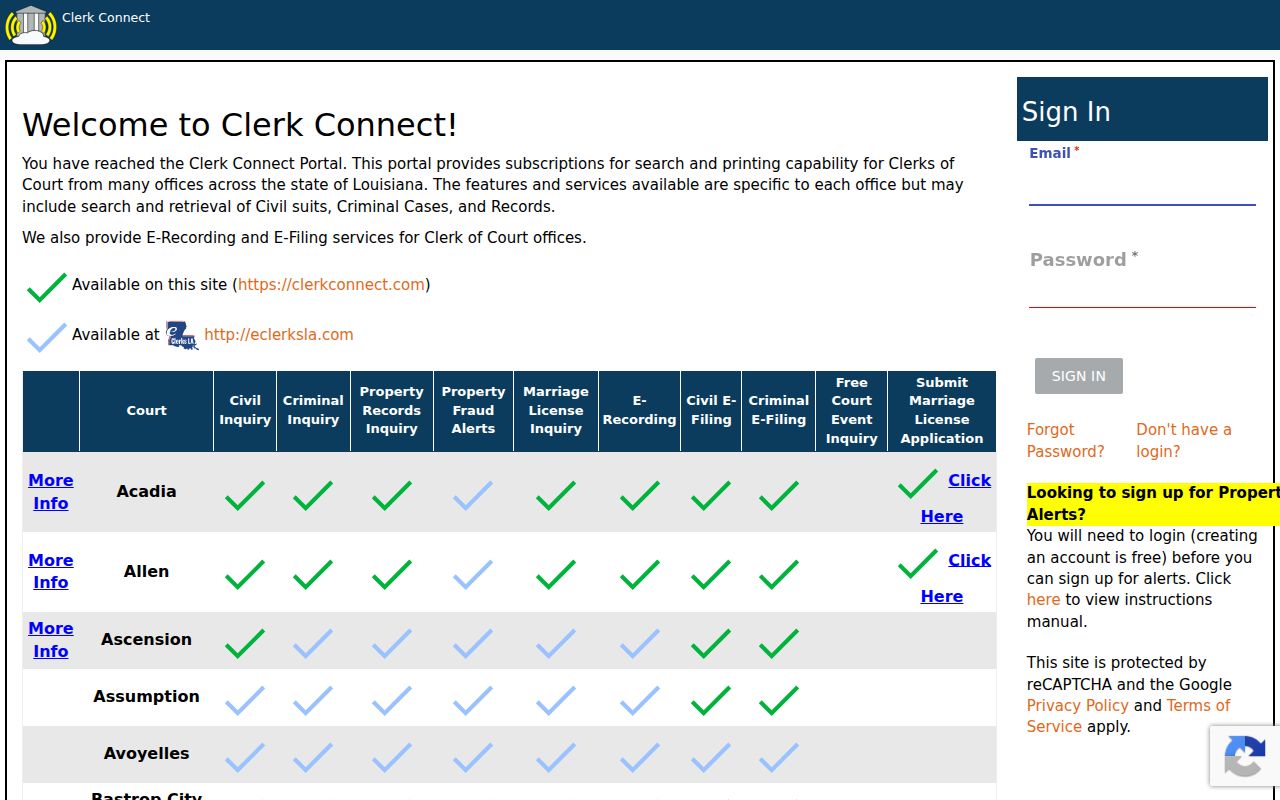
Because the whole system sits behind an account, no reliable field-by-field search walkthrough exists for the public pages. The Clerk’s e-services landing page is the official route, and it separates the online record services from the Clerk’s other functions.
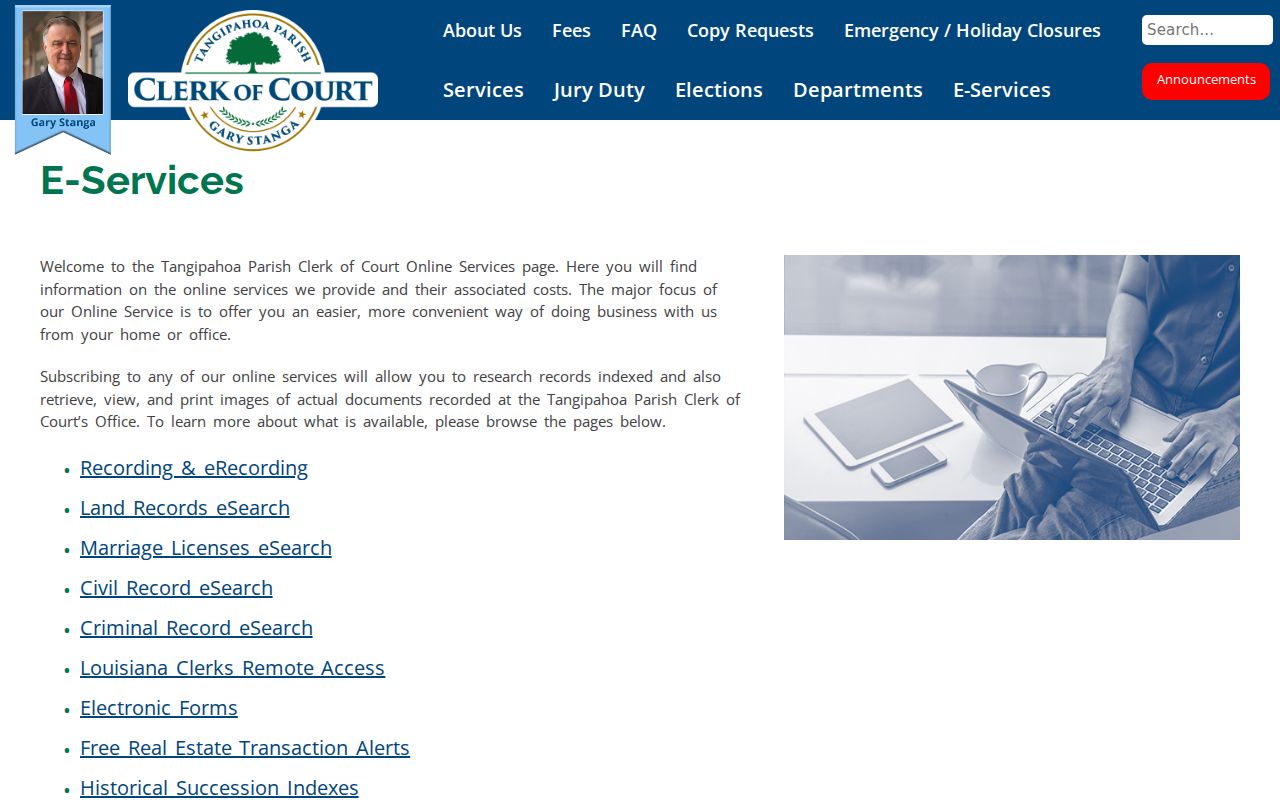
Use that routing first, then decide whether you need an inquiry, a copy request, or a filing.
How to Search by Case Number
A case or docket number is your strongest identifier. It may appear on a notice, a citation, a minute entry, a pleading, or an old order. Copy it exactly as printed. Bring the issuing court and division with it when you contact the Clerk. Tangipahoa Parish publishes no local number pattern, so the honest notation is format not publicly documented, not a made-up sample or code breakdown. The ClerkConnect screens stay behind an account. So no one can promise a specific number-search field is there.
If the number draws a blank, ask which system owns the case: criminal, civil, traffic, municipal, or federal. A transcript request needs the case name, docket number, judge, and hearing date. A copy request should say exactly what you want. Specify minutes, a plain copy, a certified copy, a disposition, or a transcript. The distinction matters. An index entry, a docket listing, and a certified record are not interchangeable.
Tangipahoa Case Search History
Coverage history shapes what a Tangipahoa Parish case search can show. The Clerk’s criminal eSearch material lists criminal information back to 1901, traffic back to 1974, and criminal images from January 2007. It also warns that detail before the 1980s may be incomplete. Older images are still being added. So a missing document image does not mean no paper record exists.
Civil and succession indexes reach back further too. The Clerk’s civil pages give conflicting image-start dates, so no single civil date is stated here; check the live civil help text and note the date of access. When a record stays offline, the File Room or Copy Department is the next stop.
The Clerk’s Information Technology page names the office that maintains eSearch. It also covers the related electronic-record links.
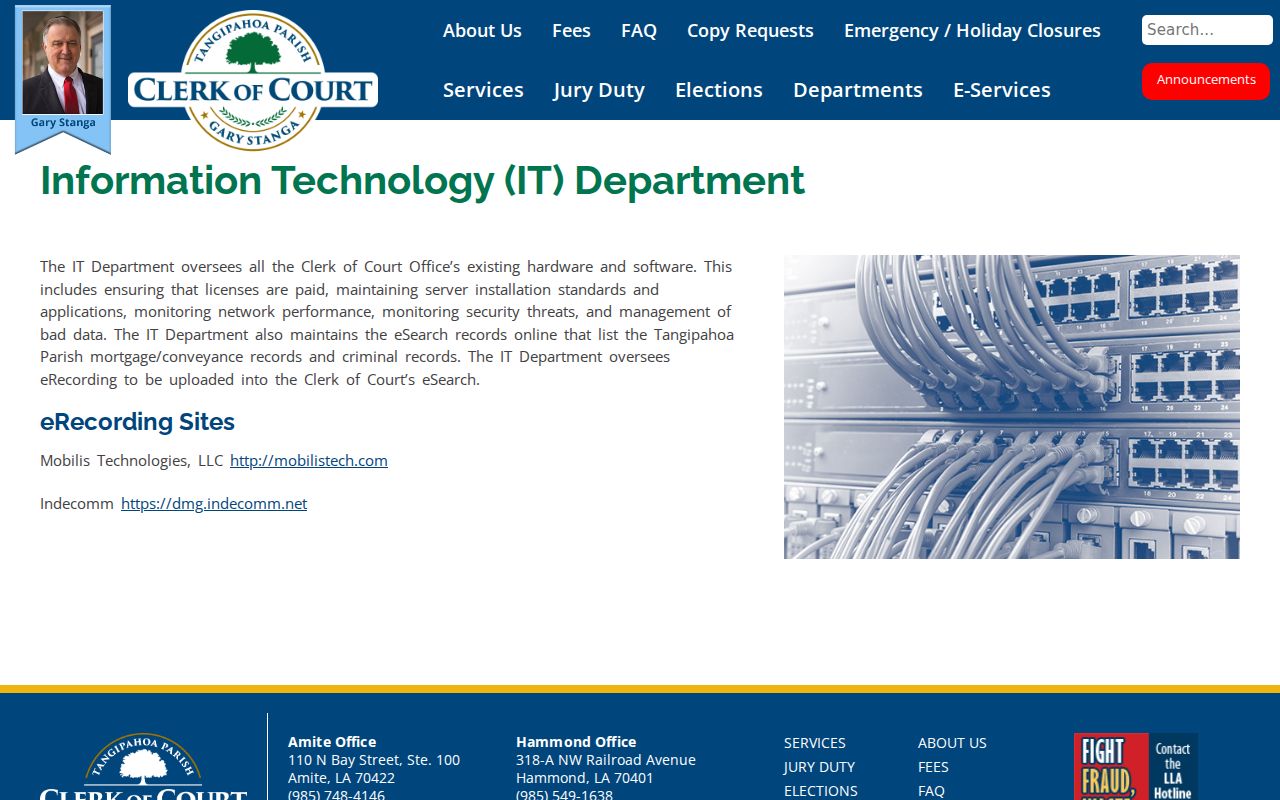
That local technology structure supports a hybrid search process for older Tangipahoa Parish records.
Note: Civil image dates should be read from the current official pages because their historical statements do not agree.
What a Case Search Shows
Read a Tangipahoa Parish result as a layered court record, not a final answer. The district’s public docket documents open with the court, parish, state, docket type, judge or division, and date. They then organize a case identifier or matter list for a scheduled action. Minutes record what happened in the courtroom. A later order, judgment, or disposition may be the document that actually controls the case. The ClerkConnect case-level display stays behind an account. Do not assume its private fields from a calendar or public PDF.
| Court, parish, and state | Identifies the jurisdiction shown in a public docket header. |
|---|---|
| Case type and division or judge | Places the matter in its docket category and court division. |
| Date | May be a scheduled proceeding date, not the filing date or final outcome. |
| Case ID and matter list | Links the listed matter to its court-assigned identifier and session context. |
| Action or minute | Records a setting, appearance, ruling, continuance, plea, or other event. |
| Later order or disposition | May appear separately in the Clerk file and can change the procedural result. |
The official Clerk e-services page documents the service family behind Tangipahoa Parish electronic records. It does not turn a calendar entry or a portal printout into a certified record.
Tangipahoa Case Search Routes
Tangipahoa Parish keeps its court records in more than one place. District criminal, civil, and traffic cases run through the 21st JDC and the Tangipahoa Parish Clerk's services. Hammond City Court holds a separate Ward 7 docket of its own. Mayor's courts and Justice of the Peace courts keep local files too. Federal matters tied to the parish sit in the federal system instead. Picking the right source up front matters. A city citation or a ward-level civil suit will not show up in a district-court subscription. For land, mortgage, and conveyance records, the Tangipahoa property eSearch at Cotthosting is the tool, though it needs a User ID and Password. It is not a court-case search.
- Criminal inquiry
- ClerkConnect service for 21st JDC criminal and traffic-related inquiry, subject to account access.
- Civil inquiry
- Separate ClerkConnect service for district civil and related records, subject to account access.
- Municipal or JP docket
- A local court record that must be requested from the issuing city, mayor’s court, or Justice of the Peace.
- Federal docket
- A case record in PACER, not in Tangipahoa ClerkConnect.
For a federal case connected to Tangipahoa Parish, PACER service is the official route, and its pages explain how federal case lookup works.
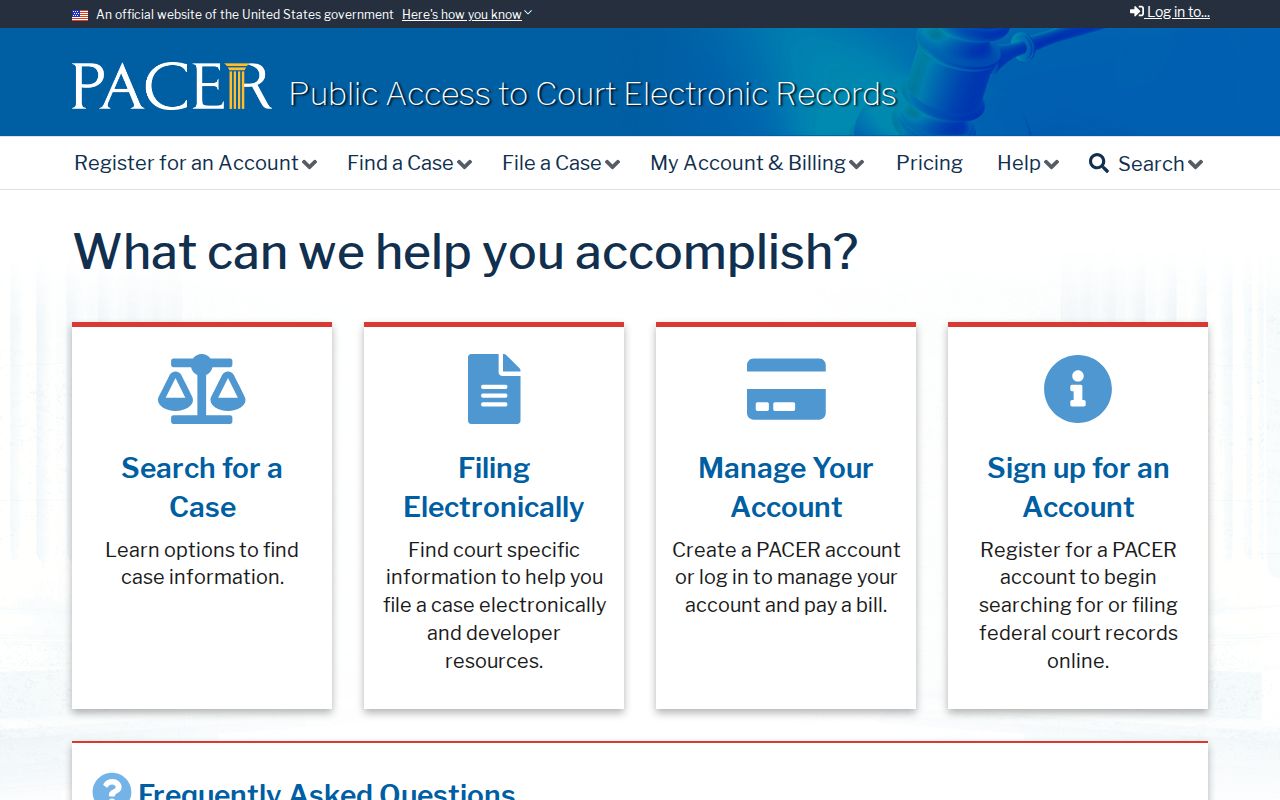
Federal access is geographically relevant but technologically separate from the parish Clerk’s case search.
County vs Statewide Case Search
Louisiana offers no single statewide trial-court case search. The First Circuit Court of Appeal sits above the trial courts as an appellate layer, so it cannot substitute for a Tangipahoa Parish district case inquiry. A 21st JDC matter calls for the right ClerkConnect service. Every lower court should be reached through its own contact or portal. General 21st JDC calendars and the District Attorney docket PDFs can add date context for a court docket question. They are not a complete case index, though.
| Search route | Scope | Important limit |
|---|---|---|
| Statewide trial search | No single Louisiana trial-court search located | Use the parish or issuing-court route instead. |
| ClerkConnect inquiry | 21st JDC criminal or civil service | Separate account-gated services with unverified public field lists. |
| City, mayor’s court, or JP | Issuing lower court | Not a unified Tangipahoa Parish database. |
| PACER | Federal cases | Separate federal system and access rules. |
Note: A posted criminal docket is current only as of posting and should be confirmed with the issuing court for a live matter.
Tangipahoa Case Search Gaps
A missing index entry is not a conclusion about anyone. Confirm the issuing court first. Check spelling, division, date range, and record type too. Then weigh the known limits: the historical reach of the criminal service, the unsettled civil image-date statements, and the restrictions on juvenile, sealed, or expunged matters. A transfer, a dismissal, later action, a municipal filing, or a federal filing can push the record you need outside the route you started with. So a gap in one index rarely settles the question.
- Check whether the notice identifies the 21st JDC, Hammond City Court, a mayor’s court, a JP court, or a federal court.
- Use the Clerk’s free public-use computer in the Criminal Department when the paid web inquiry is not useful.
- Ask for a specific minute, disposition, or copy rather than a broad conclusion from an index result.
- Contact the division, Clerk, or issuing court to confirm a current setting or access restriction.
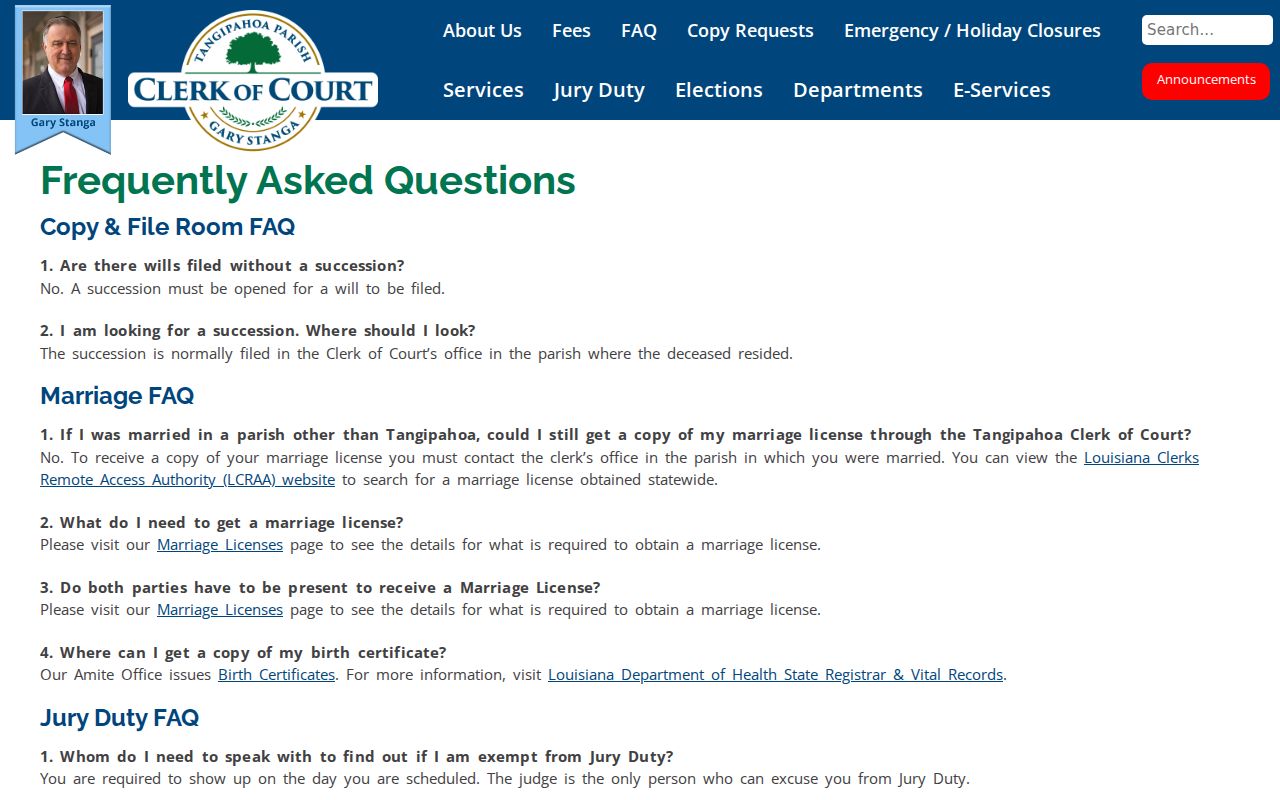
The Clerk FAQ lays out practical routes for criminal searches, minutes, dispositions, traffic matters, and public computer use at the clerk's office.
Those alternatives help when an account-gated search will not answer the precise record question.
Restricted Cases and Access Rules
Open court records still answer to confidentiality law and court orders. Louisiana Children's Code art. 412 treats juvenile records and reports as confidential. The Code's exceptions are the only openings. The Tangipahoa Parish Criminal Department says the same about juvenile proceedings. Those stay closed without a court order. Under Louisiana Code of Criminal Procedure art. 973, expunged records are confidential and not public, subject to stated legal exceptions. Louisiana Supreme Court Rule V governs motions to seal. A public filing, in short, does not mean every document stays open.
For an access-limited record, ask the Clerk whether a redacted public copy, signed judge’s order, or other authorization is required. The Clerk’s File Room identifies juvenile protective orders, adoptions, commitments, sealed files, and expunged material as special categories.
Treat a restricted flag as an access condition, not a finding. It says nothing about the details or outcome of the underlying matter.
Tangipahoa Case Search Alternatives
When an online inquiry stalls, the clerk's non-portal routes still work. The Criminal Department public computer is free to use. Copies carry a charge, though. Record and copy requests reach the Clerk through eSearch, telephone, mail, walk-in service, and department email. Criminal requests belong with the Criminal Department. Civil matters and copy requests go to the Copy Department. Give the court, the case number if known, the division, the date range, and the exact record sought. For mail, include return information plus a self-addressed, postage-paid envelope, or ask for postage instructions. That small preparation speeds up any docket search.
Tangipahoa Parish Clerk
Criminal and civil/copy request routing is available through the Clerk’s departments.
Criminal and copy requests: (985) 748-8015
criminal@tangiclerk.org for criminal requests; copyroom@tangiclerk.org for civil and copy requests.
For a municipal or JP court file, ask that court directly. A copy request is not the same as filing a new pleading. The Clerk's current notice prohibits fax and mail filings in state district and parish courts.
Note: Filing restrictions do not prevent a clerk from explaining confirmed copy-request instructions for open court records.