
Searching Tangipahoa Parish Civil Dockets
Every civil, domestic, adoption, and succession case in the 21st Judicial District Court runs through the Tangipahoa Parish Clerk of Court. Read the pleading or notice first. The court named there tells you where the record lives. District-court cases go through the Clerk's civil route. A Ward 7 small-claims matter may sit with Hammond City Court. Ward-level civil matters belong to the issuing Justice of the Peace. Federal matters are separate. Louisiana offers no single statewide trial-court search for these records.
For a 21st JDC case, gather the exact caption or case number, the division, an approximate date, and the specific item you need. The Clerk's Civil Record eSearch is the doorway to the civil service. One caution applies here. An index result, a calendar entry, or a filed civil matter proves none of the claims in it. It does not establish a debt, an allegation, or the terms of a final judgment. Ask for the docket, a document image, a minute, a judgment, or a certified copy by name.
- Confirm that the document names the 21st JDC rather than a city, mayor's, Justice of the Peace, or federal court.
- Open the Clerk's Civil Record eSearch route and the civil inquiry service for the 21st JDC record family.
- Use the caption or case number in the fields available after account access, without assuming filters that the public shell does not display.
- Read the returned record in date order, then ask the Civil Department or Copy Department for a particular open document or official copy.
Tangipahoa Civil Inquiry Access
The Clerk's civil service runs on paid ClerkConnect subscriptions. Options are $20 for 24 hours. There is also $40 for 30 days, and $300 for one year. Printed pages cost $1 each. The public side of the civil inquiry shows only account and login context. Without authorized access, it displays no dependable list of search fields, sorting rules, result limits, or document details. So hold off on counting on a party-name, date, division, or case-number search. Wait until the live account screen confirms it.
The official ClerkConnect civil inquiry page is the current online entry point for the parish district court's civil service.
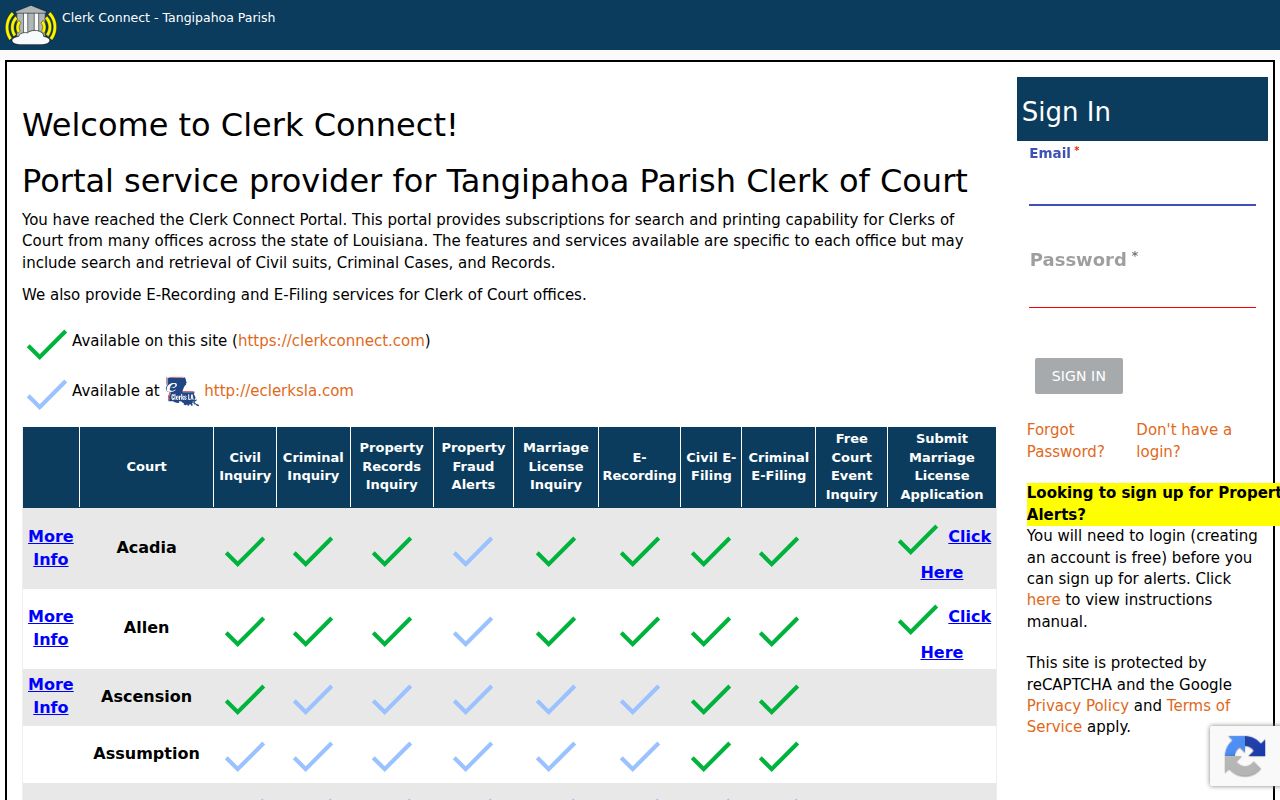
That account gate is why a public look cannot confirm every field a subscriber sees in a civil docket. What shows behind login stays behind login.
Inside a Tangipahoa Parish Civil Docket
Tangipahoa public sources speak in dockets, minutes, and court calendars. There is no published register-of-actions codebook. Read a civil record from its court and division outward. That means the identifier, the caption, the filings, the settings, the minutes, any orders, and the judgment or appeal that follows. The Civil Department does the heavy lifting. It indexes suits and costs, files pleadings, documents, and exhibits with their filing dates, issues citations, writs, and subpoenas, and processes appeals. One distinction matters. A minute records what happened in court. But a separately filed order or judgment is often the legally operative document. The Civil Department page describes the office functions behind these record stages.
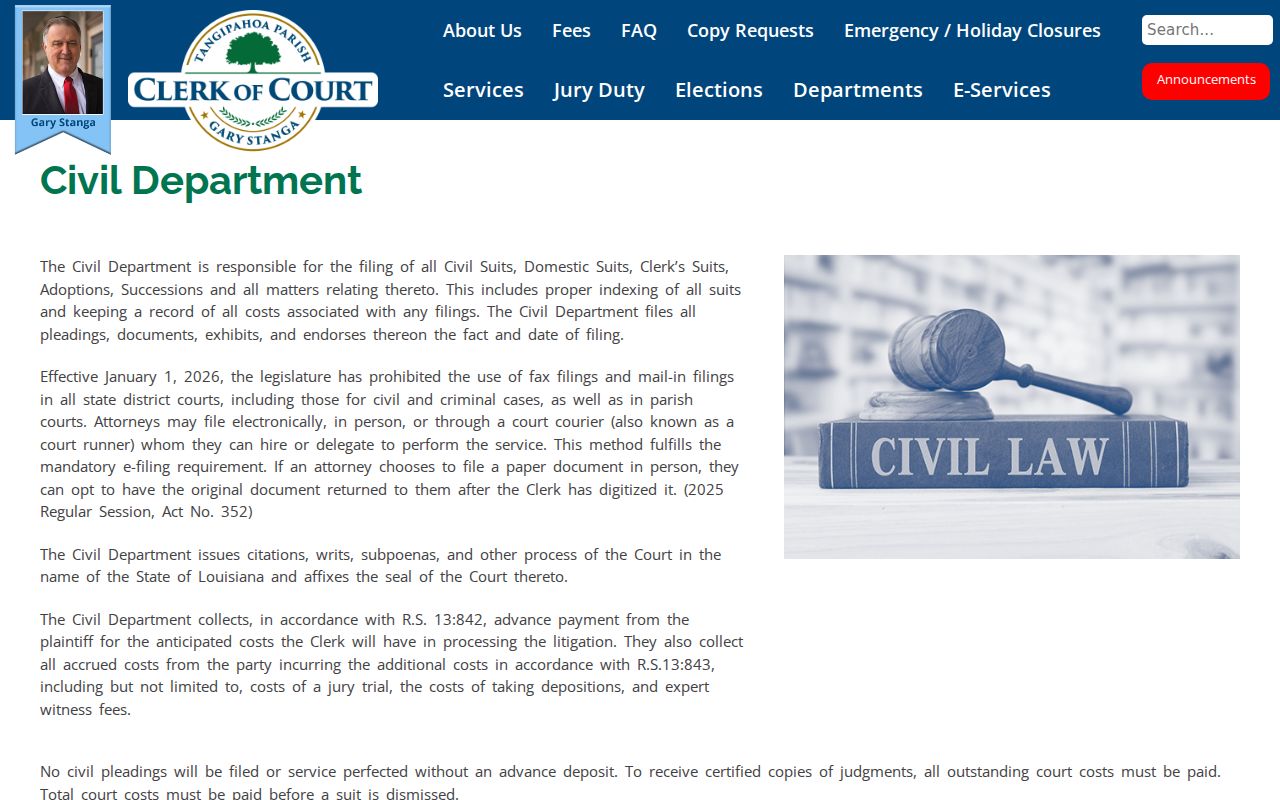
Those filing, service, cost, and appeal duties help you tell a docket entry apart from the papers and clerk services tied to it. The official civil file is the context that counts here. ClerkConnect's case-level display stays behind the account login, so treat any field list as the file's content rather than a guaranteed public screen.
| Court and division | The 21st JDC and its division place the matter with the appropriate district-court record. |
|---|---|
| Case identifier | A case or docket number identifies the matter; an exact local number format was not published in the inspected pages. |
| Caption | The formal style identifies the civil, domestic, adoption, or succession matter. |
| Filed papers | Pleadings, documents, and exhibits carry filing dates in the Clerk's civil process. |
| Service process | Citations, writs, and subpoenas are distinct service documents issued through the Civil Department. |
| Minutes and orders | Minutes record action; an order or judgment may be separately filed and control the result. |
Tangipahoa Civil Records Versus Property
Civil eSearch and property eSearch are two different systems. Civil suits and successions travel the ClerkConnect civil route. Mortgage, conveyance, land, marriage, and UCC research belong to the Clerk's property-record family. The property login asks for a user ID and password, offers account creation and password help, and warns that passwords are case sensitive. None of that makes it a civil court docket or a stand-in for the 21st JDC case record.
The Clerk's Civil Record eSearch explanation covers the civil and succession service and its historical-index notices. Be careful with coverage dates. The general e-services and civil pages use different historical-image statements, so check the live coverage text and its access date instead of picking one start year.
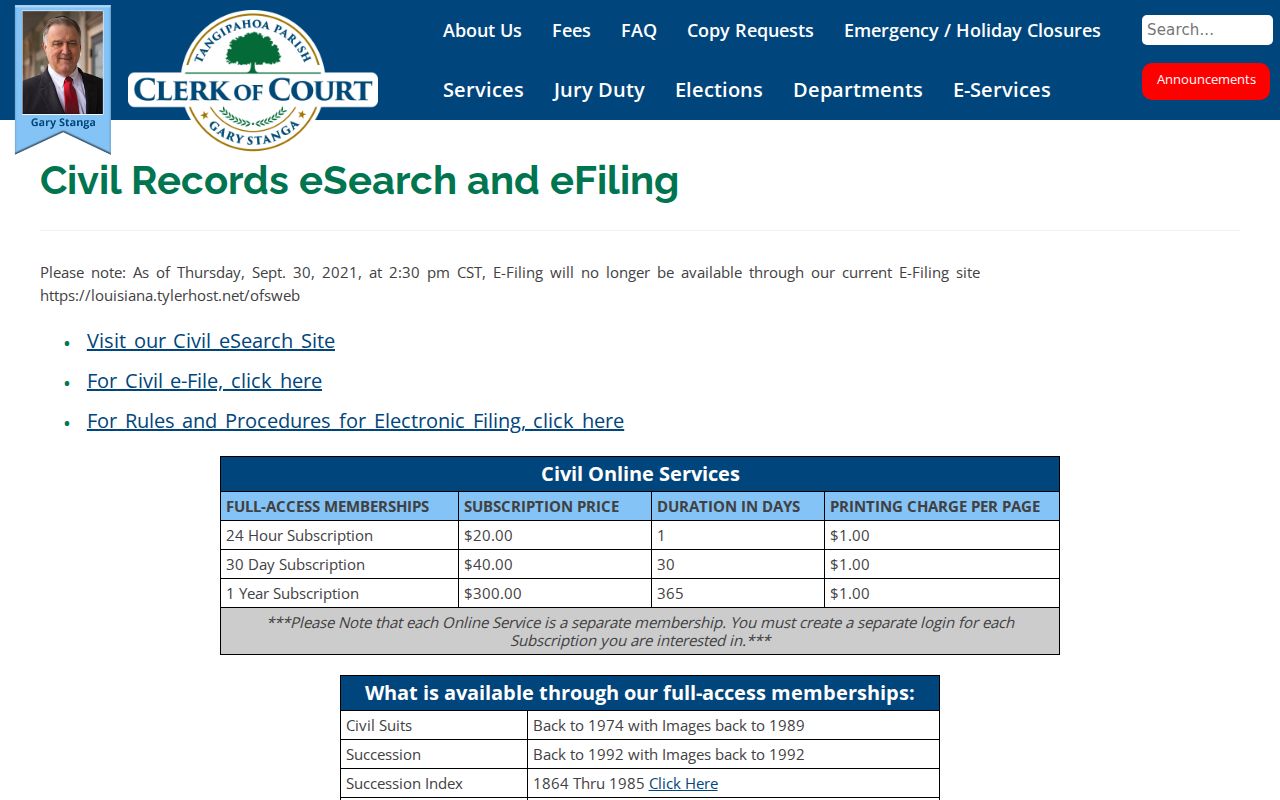
Start with the Clerk's own eSearch material for a civil or succession file, keeping the account and coverage limits it states in mind. The separate Tangipahoa property eSearch login serves the land-record route.
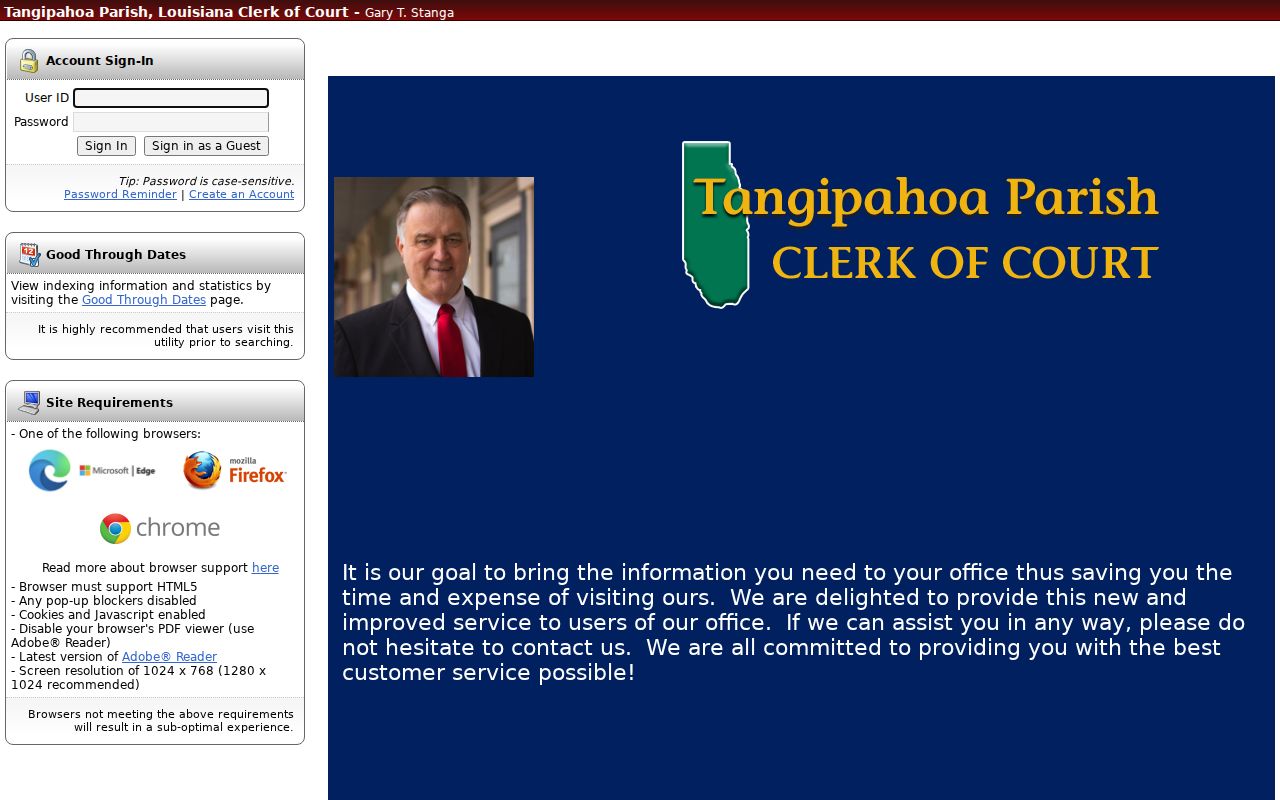
Keep those paths straight. A recorded mortgage or conveyance is not a court filing.
| Record route | Primary material | Not a substitute for |
|---|---|---|
| ClerkConnect civil inquiry | 21st JDC civil suits and successions | Land and mortgage research |
| Property eSearch | Mortgage, conveyance, land, marriage, and UCC-related records | A civil court docket |
| File Room or Copy Department | Requested civil records and official copies | Automatic access to sealed material |
Civil Case Types on the Docket
The Civil Department's docket work reaches well past the ordinary lawsuit. It files civil suits and domestic matters. It also handles clerk suits, adoptions, and successions. Probate work sits inside this civil structure. Tangipahoa Parish has no separately identified probate courthouse. Domestic matters may land within the district civil structure, including division or hearing-officer assignments. Always let the court named on the paper govern your record route. The parish's city courts and Justice of the Peace courts keep their own limited-jurisdiction files.
- Civil suits and clerk suits filed through the 21st JDC Civil Department
- Domestic matters handled in the district civil structure
- Adoptions, which can include access-restricted material
- Successions and related probate filings
- Limited civil or small-claims matters held by the issuing lower court
The Clerk's electronic forms page gathers civil reporting, marriage, mortgage, lien, UCC, and related forms in one place. A form category, though, never tells you which office holds the docket.
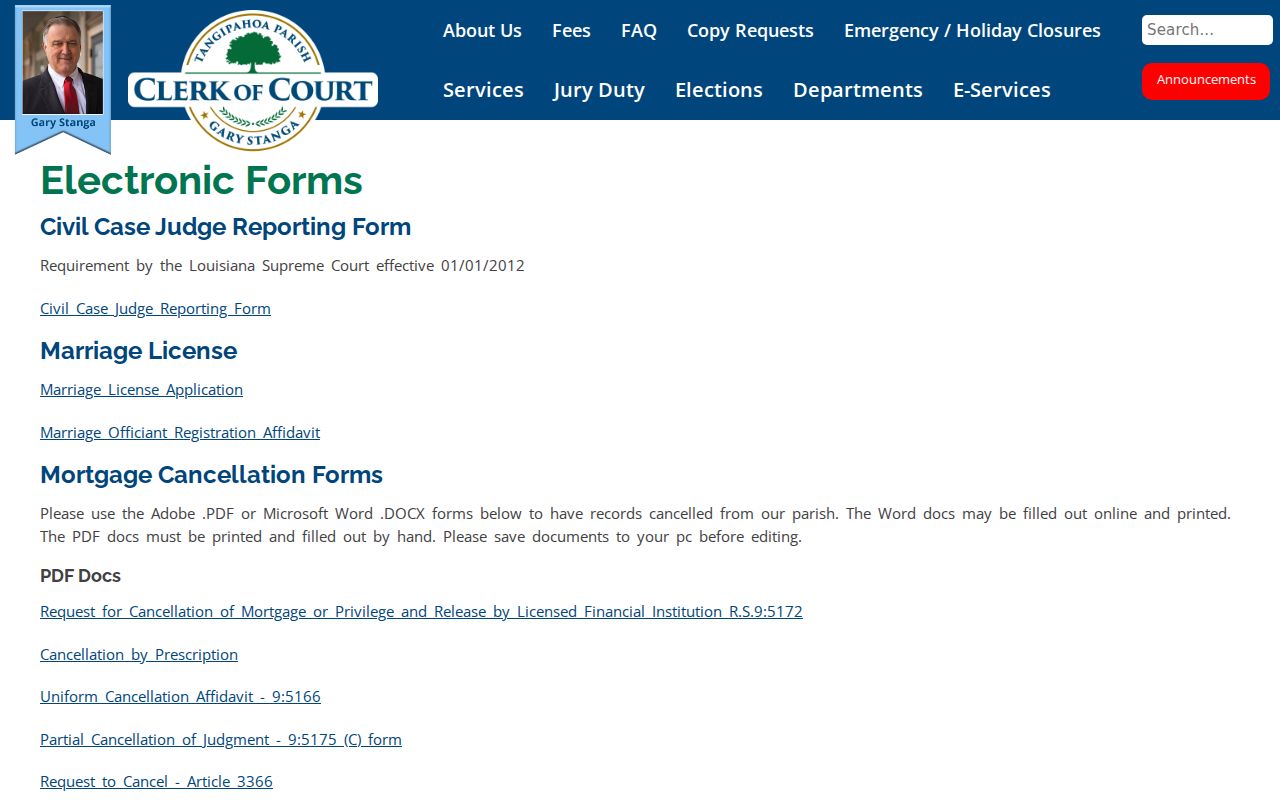
Let the court name and record type guide your choice. That is how you land on the civil case system instead of the Clerk's other document services.
Tangipahoa Civil Filings in 2024
How big is the civil docket in Tangipahoa Parish? The Louisiana Supreme Court's 2024 Annual Report gives a concrete answer for the 21st JDC. It counted 4,365 civil filings. Put against 19,820 total filings across civil, criminal, juvenile, and traffic categories, civil matters make up a real share of the court's workload. The report also notes one civil jury matter. Remember what these numbers are. They count filings, not people, outcomes, or documents you can pull up on request. That volume is exactly why a precise court, division, caption, and time frame matter when you ask the Clerk for a specific civil court record.
Numbers help you find a filing. They do not answer what happened to it. An index can steer you toward the right case in the Tangipahoa Parish docket, but only the Clerk can confirm whether a document was filed, what an order actually says, or what took place after a listed setting in that civil matter.
Civil Docket Settings and Hearings
A civil setting is a scheduled court event. It is not a result. The 21st JDC annual calendar sorts its schedule into broad categories like civil motions, civil pre-trials, civil jury and bench trial weeks, child-support matters, and family matters. Need the date for one specific case? The Clerk's research guidance says to ask the attorney, or to give the suit name and division to the minute clerk. Civil dates move by written motion or order. So check any continuance or reset against the newest minute, signed order, division contact, or the court administrator before you rely on it.
The 21st JDC calendar and its linked Duty Judge Calendar supply helpful schedule context for Tangipahoa Parish, but neither one is the case record. A calendar shows when sessions or categories are planned. For what actually happened in one civil matter, a later signed order or minute entry is the stronger source than any court calendar listing.
Tangipahoa Civil Copies and Fees
Start with a docket search result that identifies the record. Then order the product that fits your need. The options are not interchangeable. A plain image, a copy the Clerk makes, a conformed copy, a certified copy, a judgment, minutes, and a transcript are each distinct items in the Tangipahoa Parish civil system. The civil fee information lays out the differences. A copy you supply to the Clerk can be conformed for $3. It can be certified for $5. When the File Room makes the copy, its listed structure is $1 per page plus the applicable conforming or certification charge. The civil/probate search fee is listed at $10. Money rules matter here too. No civil pleading or service is processed without the required advance deposit. A certified judgment requires outstanding costs paid. Total costs must be paid before dismissal.
The official civil fee schedule also posts the advance deposits. It is the page to check live before relying on any older recording or service figure the Clerk quotes elsewhere.
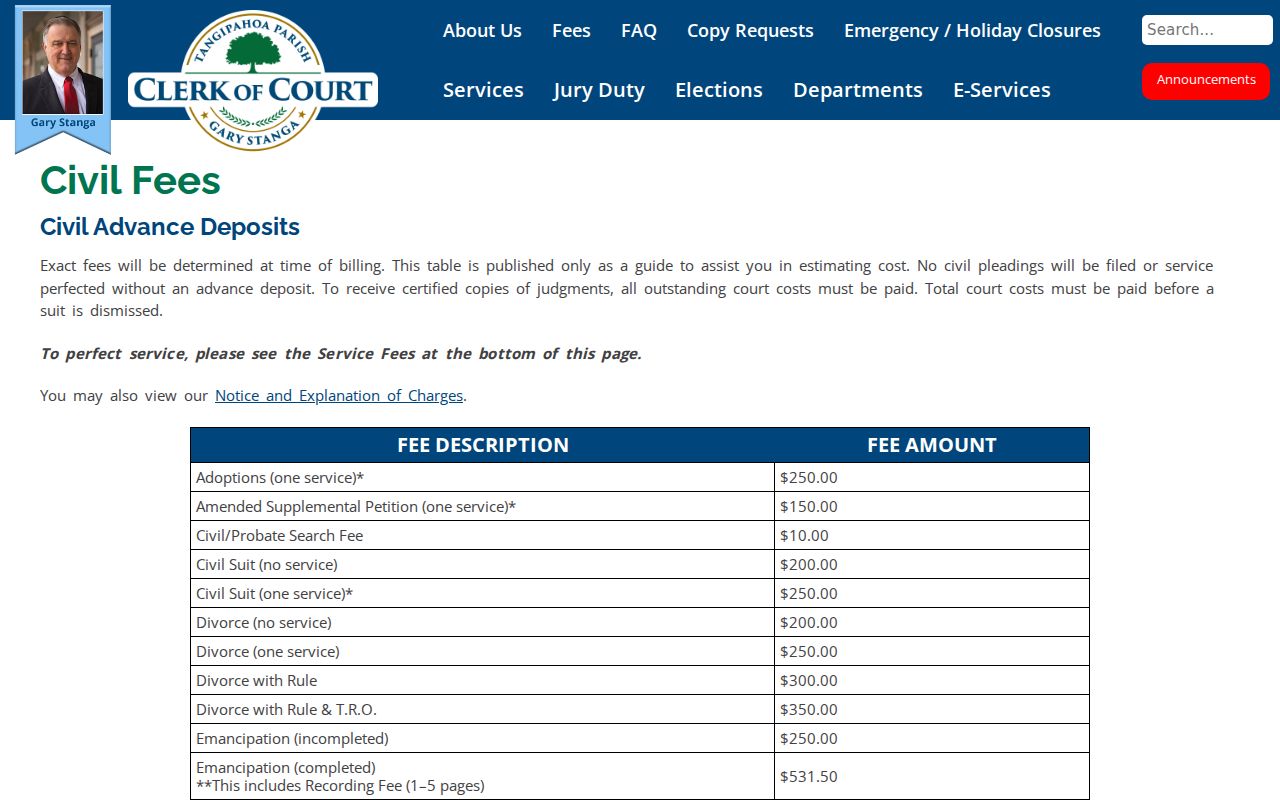
A fee table separates a record search, a copy, and filing-related deposits. Reading all three as one flat cost for every Tangipahoa Parish civil record request will lead you astray.
| Requested service | Listed charge | Important distinction |
|---|---|---|
| Civil or probate search | $10 | A search is not a certified record. |
| Conform a supplied copy | $3 | The requester provides the copy to be conformed. |
| Certify a supplied copy | $5 | Certification is an official clerk process. |
| Clerk-made copy | $1 per page plus applicable charges | Copy production and certification are separate costs. |
Civil Docket Access Rules
Louisiana Public Records Law backs your right to inspect and copy open public records. The civil-procedure rule names the clerk as the legal custodian for court records. For a Tangipahoa Parish civil request, bring specifics: the 21st JDC case number, division, date range, document type, and the format you need. The Clerk's documented copy channels include online eSearch, mail, walk-in, telephone, and department email. In the parish, the Tangipahoa Civil Department and the File Room or Copy Department handle these routes. The Copy Department sits at (985) 748-8015 and copyroom@tangiclerk.org.
Access still has limits. The Clerk's confidential vault holds juvenile protective orders, adoptions, and commitments. Sealed or confidential material can be released only under a signed judge's order. A case caption or a civil docket entry does not unlock every attachment behind it. Ask the custodian if a redacted public copy exists. Also request the legal basis for any denial of an open-record request. Neither the property portal nor a filed civil allegation can be used to work around a restriction. Nor can they prove a fact the operative record does not show.
Open-record boundaries.
La. R.S. 44:1 defines public-record and custodian concepts for Louisiana's public-records framework.
La. R.S. 44:31 provides an adult right to inspect or copy an open public record, subject to lawful exceptions.
La. C.C.P. art. 251 identifies the clerk as legal custodian and addresses examination and copying during office hours.
Tangipahoa Civil Filing Transition
Tangipahoa Parish changed its civil filing route. Tyler Louisiana gave way to ClerkConnect. The Clerk states the old Tyler civil e-filing address was retired on September 30, 2021. Both criminal and civil filing now run through the ClerkConnect login. E-filing is more than a records search, though. The electronic-filing rules cover file quality, accepted submission, fees, redaction, and the filer's duty to pick the correct case. If the Clerk accepts your submission, the filing confirmation's date and time becomes the official filing date.
The Clerk's current filing announcement adds that Act No. 352 barred new fax and mail filings in state district and parish courts after January 1, 2026. It lists e-filing, in-person filing, and court courier or runner service as the filing routes left. That rule says nothing about copy requests. So the Clerk's documented mail, phone, walk-in, email, and online channels still apply to a civil copy request, subject to the custodian's current instructions.